Sooner Politics.org
  • Front Page
  • Oklahoma News
    • Weather
    • Oklahoma Watch
    • OKCtalk
    • Oklahoma Constitution News
    • Oklahoma History
    • Today, In History
    • Faked Out Sports
    • Lawton Rocks
    • OSU Sports
  • Podcasts
    • Fresh Black Coffee, with Eddie Huff
    • AircraftSparky
    • Red River TV
    • Oklahoma TV
    • E PLURIBUS OTAP
    • Tapp's Common Sense
  • Editorial
    • From the Editor
    • Weekend Report
  • Sooner Issues
    • Corruption Chronicle
  • Sooner Analysts
    • OCPA
    • Muskogee Politico
    • Patrick McGuigan
    • Eddie Huff & Friends
    • 1889 Institute
    • Steve Byas
    • Michael Bates
    • Steve Fair
    • Josh Lewis
    • Jason Murphey
    • AFP Oklahoma
    • Sooner Tea Party
  • Nation
    • Breitbart News
    • Steven Crowder
    • InfoWars News
    • Jeff Davis
    • The F1rst
    • Emerald
    • Just the News
    • National Commentary
  • Wit & Whimsy
    • Libs of Tiktok
    • It's Still The Law
    • Terrence Williams
    • Will Rogers Said
    • Steeple Chasers
    • The Partisan
    • Satire
  • SoonerPolitics.org

On this date in 1832 President Andrew Jackson vetoed the bill that would have rechartered the Bank of the United States. Jackson...

7/16/2022

0 Comments


On this date in 1832 President Andrew Jackson vetoed the bill that would have rechartered the Bank of the United States. Jackson, like Thomas Jefferson before him, was an adamant opponent of a national bank, believing such a bank would be inherently corrupt and would favor the interests of the rich. In his veto message Jackson wrote:

“It is to be regretted that the rich and powerful too often bend the acts of government to their selfish purposes. Distinctions in society will always exist under every just government. Equality of talents, of education, or of wealth can not be produced by human institutions. In the full enjoyment of the gifts of Heaven and the fruits of superior industry, economy, and virtue, every man is equally entitled to protection by law; but when the laws undertake to add to these natural and just advantages artificial distinctions, to grant titles, gratuities, and exclusive privileges, to make the rich richer and the potent more powerful, the humble members of society–the farmers, mechanics, and laborers–who have neither the time nor the means of securing like favors to themselves, have a right to complain of the injustice of their Government. There are no necessary evils in government. Its evils exist only in its abuses. If it would confine itself to equal protection, and, as Heaven does its rains, shower its favors alike on the high and the low, the rich and the poor, it would be an unqualified blessing. In the act before me there seems to be a wide and unnecessary departure from these just principles…”

The image is a political cartoon purporting to show Jackson “slaying the many-headed monster” (the bank interests). The cane in his hand is labeled “Veto.”

Andrew Jackson delivered his veto message against rechartering the Second Bank of the United States one hundred ninety years ago today. Not until 1913 with the creation of the Federal Reserve would a new type of national bank come into existence.

(Feed generated with FetchRSS)

Read all of the articles from Constitutional Grounds, at their site.
0 Comments

The Founders recognized that the success of the new republic depended upon civic virtue or what would have then been called re...

7/9/2022

0 Comments


The Founders recognized that the success of the new republic depended upon civic virtue, or what would have then been called “republican virtue.” Taken from classical thought, the concept included public service as a duty or sacrifice. That is, citizens did not seek public office in order to obtain power, influence, or status, but rather to serve their nation, as a matter of patriotic duty. Virtuous citizens, when able, were expected to sacrifice income and leisure in holding public office and they were to put the interests of the nation above their own. Persons did not “run” for office, therefore. Instead, they “stood” for office. They would at least pretend not to desire the office, but rather to be willing to make the sacrifice to take it if their fellow citizens asked them to.

George Washington attempted to model this “republican virtue” by his conduct and example. As soon as he believed the army no longer required his service, he stepped down. He later accepted, but did not campaign for, the presidency.

When Washington saw his cabinet (and the country as a whole) splitting into competing factions, he was distressed. He decried the emergence of political parties, declaring in his Farewell Address that the “spirit of party,” “serves always to distract the public councils and enfeeble the public administration. It agitates the community with ill-founded jealousies and false alarms, kindles the animosity of one part against another, foments occasionally riot and insurrection. It opens the door to foreign influence and corruption, which find a facilitated access to the government itself through the channels of party passions.”

Because Washington believed so strongly in republican virtue and so adamantly opposed the emergence of political parties, historians have wondered why he didn’t step in and forcefully use his immense influence and authority to try to stamp them out. Some conclude that Washington’s refusal to attack the partisanship aggressively was in fact just another manifestation of his belief in republican virtue. It seems likely that he believed that the best way to combat the rise of parties and divisive partisanship was to behave as he had while commanding the army; that is, to model moderation and non-partisanship in his own conduct, trusting that his virtuous example would carry the day.

Perhaps the Founders’ reliance on republican virtue was naïve. Washington acknowledged in his Farewell Address that some believed political parties “are useful checks upon the administration of the government and serve to keep alive the spirit of liberty.” But he insisted that while that may be true in a monarchy, in republics “it is a spirit not to be encouraged…there being constant danger of excess.” He called upon the force of public opinion to keep political partisanship under control. “A fire not to be quenched, it demands a uniform vigilance to prevent its bursting into a flame, lest instead of warming it should consume.”

The painting is John Trumbull’s “General George Washington Resigning His Commission.”

(Feed generated with FetchRSS)

Read all of the articles from Constitutional Grounds, at their site.
0 Comments

Photos from Constitutional Grounds's post

7/5/2022

0 Comments

 
As I am watching all the fireworks around us tonight, I am reminded of John Adam's words of the declaration of independence they had just approved, to his wife Abigail.
"I am apt to believe that it will be celebrated, by succeeding Generations, as the great anniversary Festival. It ought to be commemorated, as the Day of Deliverance by solemn Acts of Devotion to God Almighty. It ought to be solemnized with Pomp and Parade, with Shews, Games, Sports, Guns, Bells, Bonfires and Illuminations from one End of this Continent to the other from this Time forward forever more."
May your illunimations be in a spirit of true constitutional American patriotism.


(Feed generated with FetchRSS)

Read all of the articles from Constitutional Grounds, at their site.
0 Comments

Happy Independence Day The Declaration of Independence is the public and diplomatic expression to explain the outcome of a volu...

7/5/2022

0 Comments

 
Happy Independence Day

The Declaration of Independence is the public and diplomatic expression to explain the outcome of a volume of public and private congressional work, correspondence, and diplomacy with Great Britain to address colonial grievances with Parliament and the King.

The document does not stand alone, or create the USA. In fact it was itself created in response to the Lee Resolution, also known as the Resolution for Independence, which did so. Richard Henry Lee introduced his resolution June 7, 1776 and it passed July 2, 1776. It officially created the USA. Its text reads,

Resolved, That these United Colonies are, and of right to be, free and independent States, that they are absolved from all allegiance to the British Crown, and that all political connection between them and the State of Great Britain is, and ought to be, totally dissolved. That it is expedient forthwith to take the most effectual measures for forming foreign Alliances. That a plan of confederation be prepared and transmitted to the respective Colonies for their consideration and approbation.

The Declaration of Independence was submitted to the Congress by the committee of five men who created it. Thomas Jefferson wrote the first draft. It was debated between July 2 and passed on July 4.

You may read this most significant of our founding documents here,
https://ift.tt/OvJoEpC.


(Feed generated with FetchRSS)

Read all of the articles from Constitutional Grounds, at their site.
0 Comments
    Picture

    Constitutional Grounds

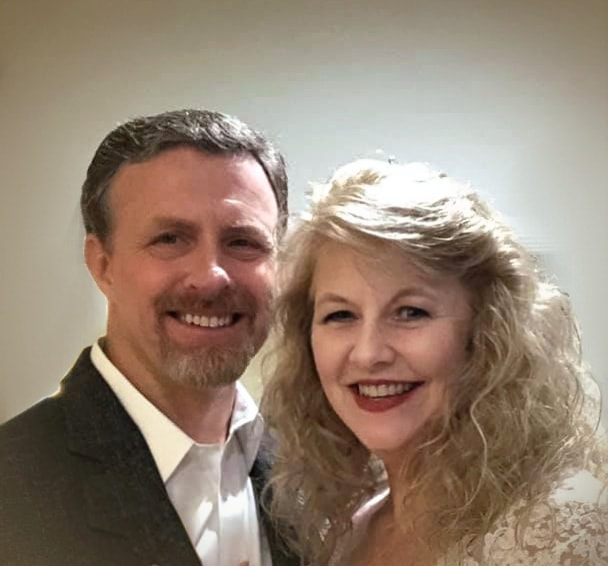
      David Oldham is a constitutional scholar and political leader. His service to Oklahoma and the nation is highly respected by his peers.
     Lori provides strategic and logistical mobilization guidance for civic engagement, She's known for empowering individuals to bring synergy through cooperative alliances for common outcomes.
    ​ Her corporate consulting skills have given her decades of experience in maximizing impact in communities, public policy, and marketplace success.

    Picture

    Archives

    July 2023
    May 2023
    April 2023
    March 2023
    August 2022
    July 2022
    May 2022
    April 2022
    March 2022
    January 2022
    November 2021
    October 2021
    August 2021
    July 2021
    June 2021
    May 2021
    April 2021
    February 2021
    January 2021
    December 2020
    November 2020
    October 2020
    September 2020
    August 2020
    July 2020

    Categories

    All

    RSS Feed

Powered by Create your own unique website with customizable templates.
  • Front Page
  • Oklahoma News
    • Weather
    • Oklahoma Watch
    • OKCtalk
    • Oklahoma Constitution News
    • Oklahoma History
    • Today, In History
    • Faked Out Sports
    • Lawton Rocks
    • OSU Sports
  • Podcasts
    • Fresh Black Coffee, with Eddie Huff
    • AircraftSparky
    • Red River TV
    • Oklahoma TV
    • E PLURIBUS OTAP
    • Tapp's Common Sense
  • Editorial
    • From the Editor
    • Weekend Report
  • Sooner Issues
    • Corruption Chronicle
  • Sooner Analysts
    • OCPA
    • Muskogee Politico
    • Patrick McGuigan
    • Eddie Huff & Friends
    • 1889 Institute
    • Steve Byas
    • Michael Bates
    • Steve Fair
    • Josh Lewis
    • Jason Murphey
    • AFP Oklahoma
    • Sooner Tea Party
  • Nation
    • Breitbart News
    • Steven Crowder
    • InfoWars News
    • Jeff Davis
    • The F1rst
    • Emerald
    • Just the News
    • National Commentary
  • Wit & Whimsy
    • Libs of Tiktok
    • It's Still The Law
    • Terrence Williams
    • Will Rogers Said
    • Steeple Chasers
    • The Partisan
    • Satire
  • SoonerPolitics.org