“You can just see that dude is going to be a great leader, a great competitor, he’s going to give you everything he’s got,” (quarterback trainer Brad) Stanfield said.
Click to set custom HTML

|
Click to set custom HTML
0 Comments

The Cowboys got a late-night commit. Indiana transfer running back Trent Howland took a visit to Oklahoma State this week, and he apparently enjoyed it. Howland announced his commitment to the Cowboys in the waning hours of Friday night. A redshirt sophomore this past season with the Hoosiers, Howland is listed at 6-foot-3, 240 pounds and rushed for 354 yards and a pair of touchdowns in 2023. He should have two seasons of eligibility remaining.
Howland was also considering Ole Miss, Duke and UCF, per ESPN’s Pete Thamel. Out of Joliet, Illinois, Howland was a three-star prospect in the 2021 recruiting class. He chose Indiana over offers from Iowa State, Nebraska, Minnesota and others out of high school. Howland entered the transfer portal in November and initially made a commitment to Minnesota before a change of heart. He then re-entered the portal in April — leading him to Stillwater. He becomes the second portal running back the Cowboys have taken this offseason, joining Arkansas transfer AJ Green. Howland continues what has become a trend of the Cowboys going after big, bruising backs. Ollie Gordon is listed at 6-2, 215, and the Cowboys picked up Jaden Allen-Hendrix from the high school ranks, who OSU listed at 6-2, 225 on signing day. Howland’s best performance of the past season came in a November game against Michigan State, where he rushed 19 times for 77 yards and a score. He also had a 13-carry, 72-yard performance against Illinois. He played nine games for the Hoosiers during the 2022 season, playing both running back and linebacker, primarily playing special teams. That year, he rushed for 12 yards on only two attempts. As a true freshman in 2021, Howland carried six times for 20 yards, redshirting while playing three games. Howland could provide a release valve for Gordon in the carry department. Gordon carried 285 times in 2023, the eighth-most in program history. Only Gordon and Chuba Hubbard have had 280 carries in a season at OSU since 1996. Lightening Gordon’s load was a topic Mike Gundy touched on earlier this spring. “We have a lot of carries for another back,” Gundy said. “The 30 carry a game for Ollie is somewhat concerning. Perfect world would be 20 to keep him healthy throughout for us and his career. He had to carry the load last year, moreso than what we’d like. There’s enough carries to go around.” Picking up Howland could also be a good move for the future. He has two seasons of eligibility remaining, and many early projections have Gordon as one of (if not the) top available running backs for next year’s NFL Draft. Green has just one season of eligibility remaining. So even past him potentially playing a role in 2024, grabbing Howland now could set the Pokes up nicely in 2025. 
Read this original article at Pistols Firing Blog.
Oklahoma State softball coach Kenny Gajewski got both Big 12 wins Nos. 99 and 100 on Friday night at Cowgirl Stadium. With inclement weather in the forecast for Saturday forcing a doubleheader Friday, the Cowgirls started their series against Kansas with two comeback wins in one evening. OSU won the first game 5-2 before beating the Jayhawks 6-5 to get Gajewski to the century mark in conference victories as a head coach. The pair of dubs also extended the Cowgirls’ winning streak to seven after sweeping Texas Tech last weekend. The first victory came the easiest as Lexi Kilfoyl gave up only one earned run while pitching a complete game and striking out seven. KU scored an unearned run in the first before Kilfoyl allowed her only earned run the next inning. The Cowgirls responded with three runs in the bottom of the second, though, to take a lead they wouldn’t lose. All of OSU’s third-inning runs came from Lexi McDonald’s double down the right-field line with bases loaded. The Cowgirls only scored again in the fifth. Micaela Wark singled in Karli Godwin first before McDonald tallied another RBI with a single that brought in Claire Timm. McDonald finished Game 1 2-for-3 with four RBIs. OSU had to mount a more monumental comeback in Game 2 after KU shut down the Cowgirls before scoring five in the third to take a 5-0 lead. OSU didn’t plate a run until the fourth, where the Cowgirls scored three to spark the turnaround. Rosie Davis put OSU on the board with a single that scored Jilyen Poullard. Timm’s double down the left-field line then brought in Davis and Caroline Wang. An inning later, the Cowgirls completed the comeback and took the lead after another three-run inning in the fifth. It took just one swing of the bat, though, as Godwin doubled with bases loaded to plate a trio of Cowgirls. Kyra Aycock got the win in the circle after entering in that third inning where the Jayhawks scored five runs. Ivy Rosenberry gave up three runs but only one earned before Aycock came in with runners on first and second. Aycock then allowed a pair of runs in the inning before shutting down KU the rest of the way while striking out four. Riding that seven-game winning streak, the Cowgirls could notch back-to-back Big 12 sweeps with a victory at 1 p.m. Sunday in Cowgirl Stadium.
Read this original article at Pistols Firing Blog.
STILLWATER — The Cougars are probably used to balls flying a little farther with Provo’s altitude, but they might’ve learned this week that thin air has nothing on the Oklahoma wind. Oklahoma State completed its series sweep against BYU on Friday in O’Brate Stadium, winning both games of a Friday doubleheader. The Cowboys won the first 11-5 and the second 12-5. OSU hit 13 home runs and scored 40 total runs in the three games. In particular, Carson Benge dominated the Cougars, finishing the series having gone 6-for-11 at the plate with eight runs scored, six RBIs and four home runs. Zooming out a little further, Benge this week went 8-for-17 with 10 runs scored, 10 RBIs and five home runs — adding his midweek performance against Oral Roberts. And on top of all that, he pitched in Thursday’s game, earning a win with his five innings of mound work, giving up a run off three hits while walking four and striking out six. “Pretty remarkable,” OSU coach Josh Holliday said. “He’s a rhythm player, he’s a feel player, he’s a ballplayer — he’s a baseball player. There’s just so much about him that’s one of a kind. He’s a very unique player. “There were great swings to all fields. Moved the ball out of the park to left, he moved some balls out to right-center, he moved some balls out to right. Obviously, the pitching effort. He took his walks. He had a great week. He put it all on display.” It would take a small novel to recap all of the runs the Cowboys scored this weekend, but they put a pair on the board in the bottom of the first of the series finale. Nolan Schubart opened the game up with an RBI double to right that scored Benge, who reached on a walk. Freshman Kollin Ritchie then brought Schubart home with a single to left. BYU momentarily had a 3-2 lead after scoring a trio of runs in the top of the second, but the Pokes quickly responded, as Zach Ehrhard hit a three-run shot in the bottom of the frame just before Benge blasted a solo shot to right-center. Benge’s blast went 464 feet and had an exit velocity of 104 mph. After giving up the early runs, Brian Holiday then settled in and threw five straight scoreless innings and went on a streak of 11 straight batters retired. He finally made a mistake in the eighth that BYU was able to capitalize on with a two-run home run that ended his day. Holiday finished having thrown 7 1/3 innings, where he gave up the five runs off four hits while walking three and striking out 10. The rest of Holiday’s run support came in the fifth and sixth. Colin Brueggemann plated a pair with an RBI single in the fifth. Then BYU was in a pretzel in the sixth. The Cowboys drew back-to-back walks to start the bottom of the inning before Ehrhard doubled, scoring the pair. Benge then brought Ehrhard in with a single. From there, Schubart walked and Ritchie was hit by a pitch to load the bases. Brueggemann then walked, scoring a run before BYU finally found a way out of the inning. Ehrhard finished the game with two hits, four RBIs and a pair of runs scored. Conference series are usually just getting started on Fridays, but this one is already over. BYU doesn’t play on Sundays, so the series started Thursday, and then the threat of looming weather moved things around for the Friday doubleheader. The Cowboys are up to 30 wins this season and are now on a five-game winning streak. OSU is 14-7 in Big 12 play, and with three conference series to go, it has another shot at some Big 12 hardware. Josh Holliday’s Postgame News Conference
Read this original article at Pistols Firing Blog.
Click to set custom HTML
Quion Williams is headed to the WAC. Williams on Friday announced he has committed to Abilene Christian out of the transfer portal. Out of Jonesboro, Arkansas, Williams spent his first two seasons of college basketball at Oklahoma State, playing in 66 games and making 28 starts. As a sophomore this past season, Williams averaged 7.5 points, 5.5 rebounds, 2.2 assists and 1.1 steals a game.
Williams was a four-star prospect in the 2022 recruiting class, according to 247Sports and Rivals. He initially chose Oklahoma State over offers from Kansas State, Houston, Cincinnati, Texas A&M, Ole Miss, TCU, Texas Tech and others. He started to show some promise during OSU’s NIT run in his freshman season, as he averaged eight points, 5.3 rebounds and 2.7 assists a game during that three-game stretch that included an 11-point, 11-rebound double-double against Youngstown State. Williams scored in double figures 10 times as a sophomore this past season, including putting up a career-high 21 against Oklahoma. He also had four double-doubles as a sophomore. He was the Cowboys leader in rebounding and steals while ranking second in assists and fifth in scoring. Funnily (or unfunnily) enough, Williams is joining a team that beat the Cowboys this past season. OSU started the year with a 64-59 home loss to the Wildcats — a game Williams had four points and 10 rebounds in. ACU finished the year 16-18. He Cowboys have picked up a pair of portal commits in recent days in FIU transfer guard Arturo Dean and Texas Tech transfer forward Robert Jennings II. New OSU coach Steve Lutz has six scholarship players on the roster at this point, meaning he has seven scholarships available to use.
Read this original article at Pistols Firing Blog.
Steve Lutz made his second portal pickup on Thursday night when Robert Jennings II pledged to the Pokes. A Texas Tech transfer, Jennings has two seasons of eligibility remaining after spending two seasons with the Red Raiders. In his sophomore year, Jennings averaged 4.4 points and 3.3 rebounds in 12.3 minutes a game. Jennings spoke with PFB over the phone on Friday to discuss his commitment. PFB: Why Oklahoma State? Jennings: “Oklahoma State, I just felt like it was a great fit from Day 1. I talked to Coach Lutz, and I loved him as a person. He’s a great person. And then, you know, just watching the film, I felt like it was the best situation for me. And also coming to a program that has a great caliber of players that have come through. Just being in Stillwater is going to be eventful. Oklahoma State has a ring about itself. “Me and Coach Lutz have a great connection, and I felt like it was the best spot. And also Coach (Robert) Guster recruited me out of high school, so I had that relationship since I was like a junior in high school. So, once Coach Guster called and I got on the phone with him, then I talked to Coach Lutz, it was like an instant connection. It felt like it was the right situation for me to go to.” PFB: So was Coach Guster recruiting you at Texas State? What is your relationship like with him? Jennings: “Texas State, yeah. When he was at Texas State he would call and always talk about how bad he wanted to coach me. I ended up going to Tech, and it’s just crazy how things come full circle and now he’s at Oklahoma State. The situation is good for him, the situation is good for me and now we all get the opportunity.” PFB: When was your visit because it sort of flew under the radar? Jennings: “My visit was Wednesday and Thursday. I just got back yesterday.” PFB: What were your takeaways from the visit? Jennings: “I love the community. Early on, you hear about Stillwater, you come for games, but you don’t really get to interact with the people. Just going around campus, just seeing how everybody interacts, everybody’s nice. The energy on campus is amazing. Everybody that I ran into, they were making me feel like I was at home — from the coaching staff to the trainers to the people that were trying to help us figure out where to park — like everybody was super nice and made me feel like I was at home. “It’s four hours away from the house. It’s a smaller city than Dallas, but it still gives me the home feeling. That’s what really stuck out to me at the visit. Because at the end of the day, being away from home, you want to be somewhere where you can feel like you’re at home and you’re loved. I feel like I really got that from Stillwater.” The rest of this interview can be seen on our forum with a PFB+ subscription here.
Read this original article at Pistols Firing Blog.
Carson Cunningham and Colby Powell discuss Steve Lutz landing two players from the NCAA transfer portal. Also, they discuss spring football and recruiting. You know what helps the show and helps us make more shows? When you rate us on Apple Podcasts or subscribe to our pod: Apple Podcasts | Google Play | Spotify | SoundCloud. As always, we appreciate our sponsors Chris’ University Spirit and Yuengling.
Read this original article at Pistols Firing Blog.
PFB is partnering with Pokes With A Purpose for its season ticket raffle, where fans can win season tickets, autographed items and more. For more information on the raffle and how to enter, click here. Be sure to enter by April 28. ScoresBaseball: Cowboys 17, BYU 5 OSU Bullets• Cowboys landed a commitment yesterday from a forward of another Big 12 school (PFB) • A couple of solid recruiting notes ($$$) – Brandon Garrison is open to coming back to Stillwater, Davonte Davis appears to be an Oklahoma State lean, and Moussa Cisse has been visiting Stillwater again (247 Sports $$$) • Solid explanation of what Cowboy quarterback commit Adam Schobel needs to dig into:
• This bowl prediction article has the Pokes in the Liberty Bowl – folks must be assuming the Pokes finish with seven or eight wins to fall to here, right? (247 Sports) • The OSU grad dominating TikTok (DailyMail) Non-OSU Bullets• This Ringer piece on Thunder playoffs gave me chills – so fun. Had to pull out the quote below. • It feels different this time around. We are more aware of the fragility of these championship windows and understand better that just because a team is young and exciting today does not mean they will be that way in perpetuity. These Thunder are at the beginning of their run—a 1-seed with a high-end talent already in hand, a trove of draft picks, and no albatross contracts. But who knows what will happen tomorrow? Bodies can break, personalities can clash. The future can be unkind to the past. Let’s enjoy the party while we can. [The Ringer] I get that the dog is trained but darn I still enjoy it:
Read this original article at Pistols Firing Blog.
It took the Oklahoma State football team until the fourth quarter to reach 17 against BYU this past fall. It took the baseball team eight innings to reach that same mark Thursday night. The Cowboys hammered BYU 17-5 in Game 1 of the Big 12 series as seven home runs left O’Brate Stadium. OSU is now on a three-game winning streak after losing three in a row before that. Although the scoring started early for the Cowboys on Thursday, the long balls didn’t come until later. After BYU struck first with a run in the first, OSU answered with four in the bottom half, starting with a Nolan Schubart single with bases loaded that scored Lane Forsythe. Zach Ehrhard and Carson Benge then scored thanks to a throwing error to erase BYU’s lead before the Cougars even got their first out. Avery Ortiz added one more with an RBI single down the left-field line. With severe weather in the forecast that even postponed the scheduled Cowgirl softball game down McElroy Road, the home runs started raining down in the second inning for the Pokes. First it was Schubart over the left-field wall, also scoring Ehrhard. Then it was Ian Daugherty, also over left field, for back-to back home runs.
Benge then hit one the other way in the fourth inning. Then Schubart hit the second of that inning and his second of the game. In the fifth, it was Ortiz beyond left field, then Benge with his second of the night, this time over left-center. Not to be left out, Cooper Vest notched a home run for BYU in the ninth.
Benge wasn’t just deadly at the plate, though, going 3-for-4 with the pair of homers, three RBIs and four runs. Benge started on the mound, pitching five innings, giving up only the first-inning run and four walks while picking up the win. He struck out six BYU batters. The Cowboys led 12-1 by the time the home-run downpour ended in the fifth. The conclusion of homers didn’t mean the end of scoring, though. OSU scored three more in the seventh — two from a Daugherty double and one via a Jaxson Crull sac fly. Then it was two more in the eighth, as Max Knight pinched hit to double in Forsythe and Schubart singled in Knight. The series between the Cowboys and Cougars will continue with Game 2 at 6 p.m. Friday night from O’Brate. However, there is inclement weather in the forecast.
Read this original article at Pistols Firing Blog. |
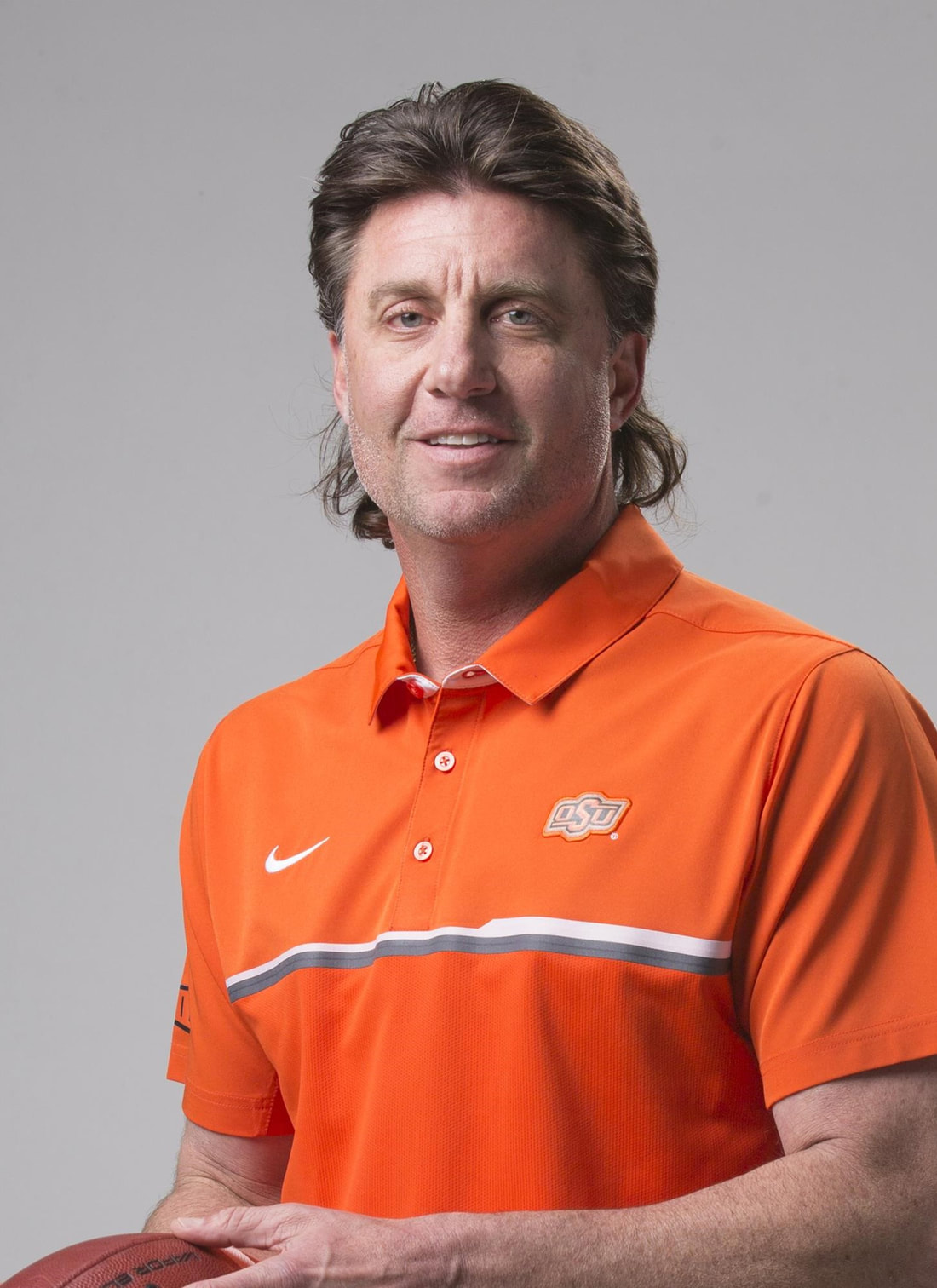
   
Gundy's OSU Keeping up with Head Coach Mike Gundy and the OSU football team. 
Archives
January 2024
Categories
|
918 . 928 . 7776 |
 RSS Feed